
BPEXCH Poker TDS Policy

Understanding how taxes may apply to online poker winnings is important for players who want to manage their accounts responsibly. The BPEXCH Poker TDS Policy is designed to explain how tax deduction at source (TDS), where applicable, may be handled when eligible winnings or withdrawals are processed. Having a clear policy helps users understand potential deductions before requesting a withdrawal and encourages greater transparency between the platform and its users.
For players accessing BPEXCH from Pakistan, it is particularly important to understand that taxation can depend on current Pakistani laws, the nature of the income, and the user’s individual circumstances. The information provided in a platform policy should therefore be viewed as general guidance rather than personal tax advice.
What Is the BPEXCH Poker TDS Policy?
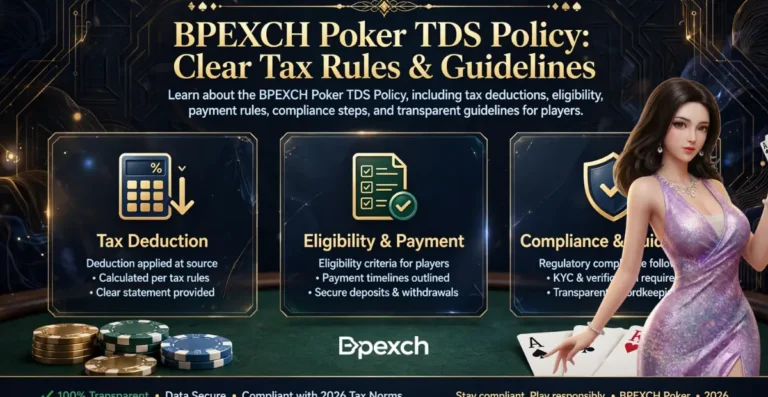
TDS, or Tax Deducted at Source, refers to an amount that may be withheld from a payment before the remaining amount is transferred to the recipient. In an online poker environment, a TDS policy can establish how potentially taxable winnings are identified, calculated, recorded, and communicated.
The purpose of the BPEXCH Poker TDS Policy is to provide users with a framework for understanding possible deductions associated with eligible transactions. Instead of discovering an unexpected deduction after a withdrawal request, users can review the applicable terms and understand that taxes or statutory deductions may affect the final amount received.
Because tax rules can change, BPEXCH users should always consider the latest applicable regulations and seek professional advice when necessary.
Why TDS Information Matters for Pakistani Players
Players in Pakistan should pay attention to taxation when receiving money from digital platforms. The treatment of online winnings may depend on several factors, including the type of transaction, the user’s tax status, the applicable legal framework, and how the income is classified.
A transparent TDS policy can help users distinguish between their gross winnings and the amount they may actually receive after applicable deductions.
For example, a player may see a withdrawal amount displayed in their account, while the final transferable amount could be different if a legally required deduction applies. Clear communication about such deductions can reduce confusion and help users maintain better financial records.
How TDS May Apply to Poker Winnings
The application of TDS generally depends on whether a transaction falls within an applicable tax requirement. Where a deduction is required, the platform may calculate the relevant amount according to its policy and the applicable legal requirements.
A simplified transaction process may look like this:
- A player participates in an eligible poker activity.
- The player’s account records the resulting balance.
- A withdrawal request is submitted.
- The platform determines whether any applicable deduction is required.
- The relevant amount is deducted where legally necessary.
- The remaining amount is processed for withdrawal.
- Transaction details may be recorded for compliance purposes.
The exact process, thresholds, rates, and documentation requirements can vary according to applicable law and platform rules. Users should therefore review the current BPEXCH terms before relying on any specific tax calculation.
Gross Winnings vs. Net Withdrawal
One of the most important concepts for players to understand is the difference between gross and net amounts.
Gross winnings represent the amount credited before applicable deductions. Net withdrawal refers to the amount remaining after any required deductions, fees, adjustments, or other permitted charges.
For instance, if a user’s eligible balance is subject to a statutory deduction, the final amount reaching the user’s selected payment method may be lower than the original displayed balance.
Keeping these amounts separate is useful when maintaining personal financial records. Users should retain relevant transaction confirmations, withdrawal records, and account statements where available.
Accurate Account Information
Maintaining accurate account information is an important part of financial and compliance procedures. Users may be asked to provide identification or verification information before certain withdrawals can be completed.
BPEXCH may use account verification procedures to help confirm the identity of the account holder and protect against unauthorized transactions. Users should ensure that information submitted during registration and verification is accurate and belongs to them.
Incorrect, incomplete, or inconsistent information may result in additional verification requirements or delays in processing.
Payment Records and Transaction Transparency
Good record keeping can make it easier for users to understand their financial activity. Players should consider retaining information such as deposits, withdrawals, transaction dates, account statements, and applicable deduction records.
A transparent transaction history allows users to compare the amount requested with the amount received and identify whether any deduction was applied.
For users who are required to report income or financial transactions under applicable regulations, maintaining organized records may also make discussions with a qualified tax professional easier.
Policy Updates and Changes
Tax regulations and financial requirements can change over time. As a result, the BPEXCH Poker TDS Policy may need to be updated when relevant legal or operational requirements change.
Users should avoid relying on outdated screenshots, social media posts, or unofficial articles when determining their current tax responsibilities. The latest official platform terms and applicable Pakistani regulations should take priority.
If a change affects withdrawal calculations or documentation requirements, users should review the updated policy before completing a transaction.
User Responsibilities Under the TDS Policy
While a platform may handle certain deductions where required, users remain responsible for understanding their own financial and tax obligations.
Players should:
- Provide accurate account and verification information.
- Review the current BPEXCH terms before making withdrawals.
- Keep records of relevant transactions.
- Understand the difference between gross and net amounts.
- Check applicable Pakistani tax requirements.
- Seek professional tax advice when their circumstances require it.
- Avoid relying on unofficial information for important tax decisions.
Following these practices can help users maintain better control over their financial records.
What Happens if a User Disagrees With a Deduction?
If a user believes a deduction has been applied incorrectly, the first step should be to review the transaction details and applicable policy. The user can then contact the platform’s customer support team and provide the relevant transaction information.
A support request may need details such as the withdrawal reference, date, amount, and account verification information. Users should avoid sending sensitive credentials such as passwords or security codes.
If the question concerns personal tax liability rather than a platform calculation, consulting an appropriately qualified tax professional may provide more reliable guidance.
Responsible Financial Management
Understanding TDS is only one part of responsible online account management. Users should approach poker and other online entertainment activities within their personal financial limits.
Players should never use essential household funds, borrowed money, or money reserved for important expenses to participate. Setting personal spending limits and maintaining clear transaction records can support healthier financial decision-making.
A transparent policy should help users understand transactions—not encourage them to take unnecessary financial risks.
Frequently Asked Questions
Does every poker transaction automatically have TDS?
Not necessarily. Whether a deduction applies depends on the relevant legal requirements, transaction type, and applicable platform terms.
Can TDS rates change?
Yes. Tax rules and regulatory requirements can change. Users should check the latest applicable requirements rather than relying on historical rates.
Is BPEXCH responsible for my personal tax obligations?
Platform-level deductions and an individual’s overall tax obligations are not necessarily the same thing. Users should determine their own responsibilities under applicable law.
What records should I keep?
Users should consider keeping withdrawal confirmations, transaction histories, account statements, and records of any deductions applied to their transactions.
Where can I get personal tax advice?
For questions about individual tax liability in Pakistan, users should consult a qualified Pakistani tax professional or the relevant tax authority.
Final Thoughts
The BPEXCH Poker TDS Policy provides an important framework for understanding how potential tax deductions may affect eligible poker-related transactions. For Pakistani users, understanding the distinction between gross winnings, applicable deductions, and net withdrawals can make account management more straightforward.
However, tax responsibilities are ultimately influenced by current legislation and individual circumstances. Users should review the latest BPEXCH policies, maintain accurate financial records, and obtain professional advice when necessary. A careful approach to documentation, verification, withdrawals, and tax compliance can help create a more transparent and informed digital gaming experience.